
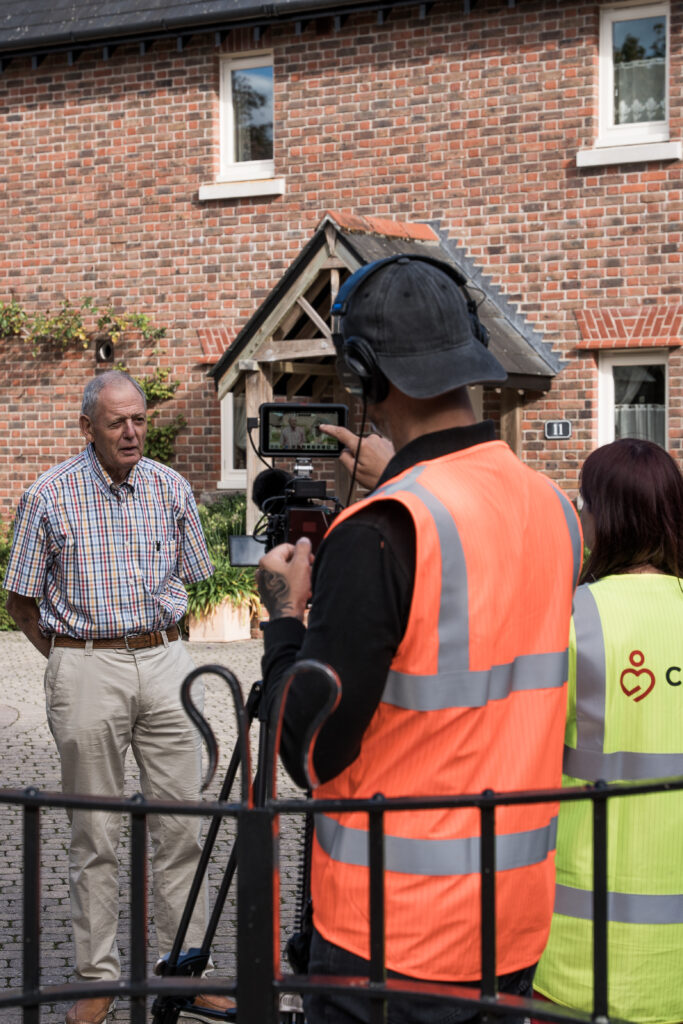
Sylvestris Studios

We're all becoming the same. And AI is making it worse.

VIDEOGRAPHER IN DORSET

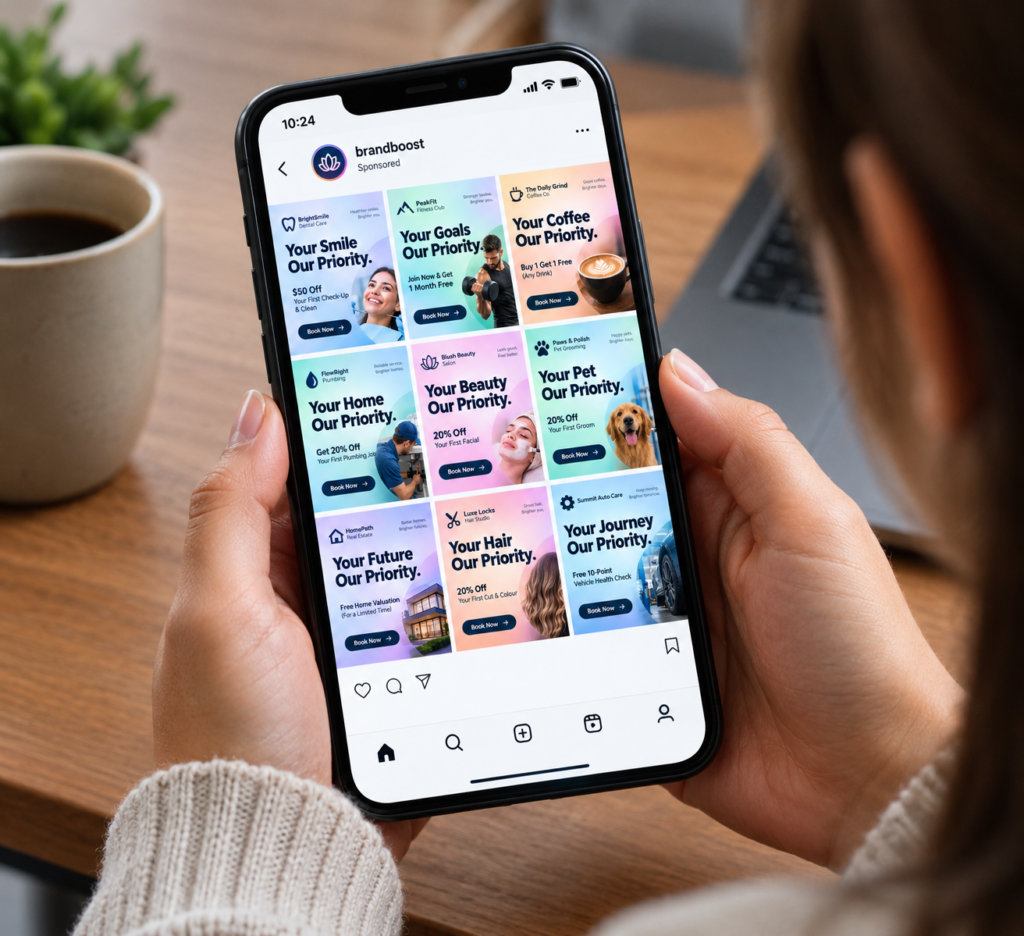
Over the last few weeks, I’ve noticed an increasing number of graphic designers, marketers and other creative professionals complaining about the same thing. Their social media feeds are filling up with AI-generated posters and advertising graphics, and they’re all starting to look remarkably similar. You know the sort of thing. Huge, shouty headlines. Overblown graphics. Garish colours. A layout that looks as though someone has taken an American roadside billboard from the 1990s, fed it through a computer and asked it to make something that screams LOOK AT ME!

They’re not necessarily badly executed. In some cases, they’re technically quite impressive. But there’s something fundamentally wrong with them. They all look the same. And, more importantly, they say very little about the businesses they’re supposed to represent. Think about what a business is actually trying to achieve when it markets itself. It wants to stand out. It wants people to recognise its name, understand what makes it different and, ultimately, choose it over the competition. That might be a product that’s better made, a service that’s more personal, a business with a particular philosophy or simply a company that does things a little differently. Whatever it is, the objective is to communicate something distinctive enough to make a potential customer think, That’s the one I want. Because people don’t just buy products and services. They buy into ideas, experiences and feelings. They want to feel that they’ve made the right choice. That they’ve found something that suits them, understands them or offers them something they can’t get elsewhere.

In other words, businesses spend a great deal of time and money trying to make themselves different. So why, at a time when technology gives us more creative possibilities than ever before, are so many of them choosing to look exactly like everybody else?

The problem didn't start with AI

It’s tempting to blame AI for all of this, but I don’t think that’s entirely fair. The groundwork was laid long before the first AI-generated advertising graphic appeared in your feed.

For years, businesses have been told that they don’t need to spend money on professional marketing. They can do it themselves. All they need is a phone, a social media account and a little bit of know-how. And to a degree, that’s true. The tools are there, and there’s nothing wrong with a business owner getting involved in their own marketing.

The problem is what happens when everyone follows the same advice. People start copying the content that’s already performing well. They use the same opening lines, the same hooks, the same trending audio and the same carefully engineered scenarios designed to stop someone scrolling for an extra second.

Every other video seems to begin with a variation of “Three things you’re doing wrong”, “Nobody is talking about this” or “Here’s why you’re losing money”.

Every business is suddenly an expert at telling you what you should be doing. Every ordinary experience becomes a lesson. Every conversation becomes a potential reel. And every moment of someone’s life becomes an opportunity to create content. Before long, you can scroll through dozens of accounts and struggle to remember a single thing you’ve seen.

There’s a word for this: homogenisation. It’s what happens when things that were once different gradually become so alike that the differences barely matter anymore. And social media has become exceptionally good at encouraging it.

VIDEO MARKETING

When everyone wants to be a marketer

MARKETING AND BRANDINGI remember a time when working in advertising and marketing carried a certain prestige. Think of the big creative agencies, the likes of Saatchi & Saatchi, and the campaigns that became part of popular culture.

Getting into that world meant bringing something to the table. Original thinking. An understanding of people. The ability to take a brief, find an idea that nobody else had considered and turn it into something that made people stop and pay attention.

It was competitive, demanding work. Being creative wasn’t just a nice extra. It was the job.

Today, social media has made marketing look like something anyone can do, and in many respects the barriers to entry have disappeared.

I can understand the attraction. If you enjoy spending time on Instagram, making videos, posting photographs and experimenting with what gets a reaction, why wouldn’t you consider turning that interest into a career?

But enjoying social media and understanding marketing aren’t the same thing.

It’s a bit like the years when everyone wanted to be a pop star. Programmes such as Pop Idol made it seem as though fame was just an audition away. Millions of people fancied their chances, but wanting to be a successful musician and having the ability, originality and determination to build a career in music were two very different things.

The same applies to marketing.

Knowing how to post a video isn’t the same as knowing why someone should watch it. Knowing how to make a graphic isn’t the same as understanding what a brand needs to communicate. And knowing how to get attention isn’t the same as knowing what to do with it once you’ve got it.

There are talented people entering the industry through social media, just as there are talented people entering it through more traditional routes. This isn’t about dismissing an entire generation or suggesting that everyone needs formal qualifications to be creative.

It’s about recognising that access to the tools doesn’t automatically give you the skills to use them well.

And when the same handful of techniques are repeated by thousands of people, originality becomes increasingly difficult to find.
The algorithm has a lot to answer for

Anyone who has spent time trying to build a business through social media will know that the quality of your work doesn’t necessarily determine how far it travels. I see it in my own industry. I’ll spend hours planning, filming, lighting, editing and grading something, doing everything I can to produce work that represents the client to the highest standard. I’ll put it out into the world, and it can feel as though hardly anyone has seen it.

Meanwhile, a video that appears to have been thrown together in five minutes can find its way onto thousands of screens. It’s frustrating, of course. But there’s a reason for it. Social media platforms aren’t primarily designed to reward craftsmanship. They’re designed to keep people on the platform. The longer we watch, scroll, click, comment and share, the more opportunities there are to show us advertising.

The algorithm doesn’t necessarily care whether something is beautifully made, carefully considered or creatively original. It cares about the signals that suggest we’ll engage with it. And over time, that changes what people make.

A few years ago, one of the big buzzwords in marketing was UGC: user-generated content. Brands were increasingly interested in content that looked as though it had been made by an ordinary customer rather than a professional production team.

There are perfectly good reasons for that. Genuine customer experiences can be incredibly persuasive, and a polished corporate video isn’t the right answer for every business.

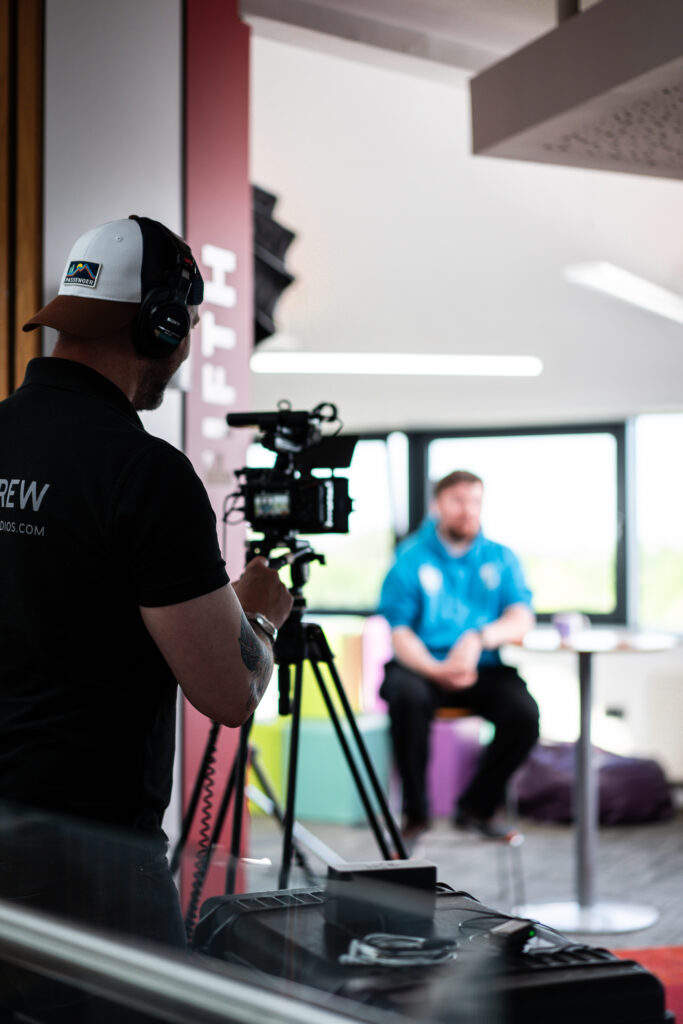
VIDEOGRAPHY BTS

But I’ve always found the conversation around UGC interesting from the perspective of someone who makes a living producing professional content. I’m not a customer casually documenting an experience on my phone. I’m a professional who creates photographs and films for other people. There’s a difference, and I don’t think we should pretend otherwise.

The trouble is that platforms have helped create an environment in which rough, immediate and easily replicated content can receive far more visibility than work that takes considerably more time, skill and investment to produce. Imagine opening Instagram and finding that every video, every photograph and every advertisement was an exceptional piece of professional work. Beautifully lit. Thoughtfully composed. Carefully edited. Original in its concept and execution. Would you feel compelled to try to recreate it all yourself? Or would you simply appreciate it for what it was?

Now imagine a feed where everything is designed to look as though you could have made it yourself in ten minutes. That second environment is much easier to participate in. It gives everyone a chance to become a creator, and it supplies the platforms with an almost endless stream of content. But an endless supply of content doesn’t necessarily mean an endless supply of good content. It just means there’s more of it.

And now AI has entered the room

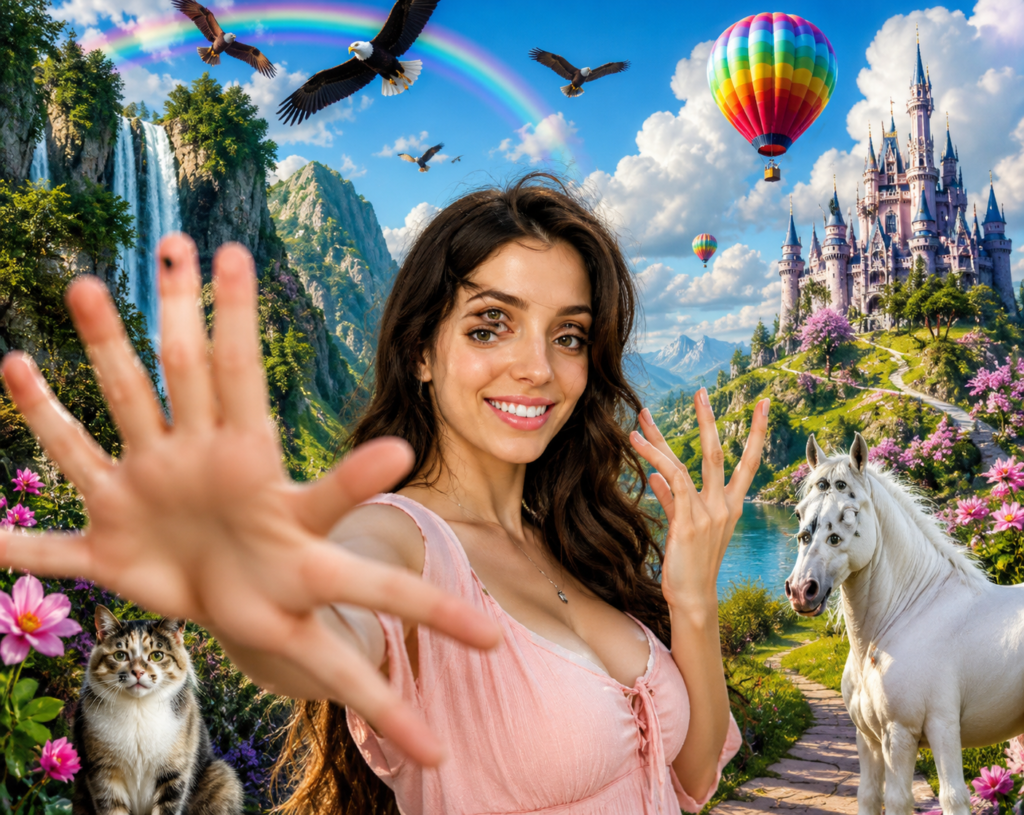
An ai image that has all the flaws that one would thing of regarding an ai image.

For a while, it seemed that anyone with a smartphone could become a content creator. There were endless opportunities to film reactions, review products, document holidays, perform pranks or offer unsolicited advice to strangers.

Entire followings have been built around formats that are repeated so frequently that the people making them are almost interchangeable. And now, for those who don’t want to go out and film anything at all, there’s another option. AI.

You don’t need a camera. You don’t need to visit a location, meet a customer, interview an interesting person or even have a product in front of you. You can sit at home, type a few instructions into an application and generate a picture, a video, an advert or an entire campaign. I’m not suggesting that all of this is bad. Far from it. There are some genuinely useful applications for AI, and I’m not interested in pretending that technology should stand still simply because it makes certain aspects of our jobs more difficult. Used thoughtfully, these tools can help people work through ideas, solve problems and achieve things that would otherwise be beyond their resources.

But there’s a difference between using technology to help you express an idea and using it as a substitute for having an idea in the first place. That’s where I think things become interesting. AI has made it easier than ever to produce something that looks like marketing. Something that looks like an advertisement. Something that looks as though a great deal of creative thought has gone into it.

But looking like something and actually being something are two very different things. A striking image isn’t necessarily a strong brand message. A clever headline isn’t necessarily a good campaign. And an advertisement that looks impressive in isolation isn’t necessarily doing anything to distinguish one business from another. If everyone is using similar tools, similar prompts and similar references to generate the same visual language, we’re simply accelerating the problem we’ve already created.

We’re giving everyone the ability to produce more of the same, faster than ever before. And then we’re wondering why everything looks so generic.

So who's really responsible?

It’s easy to point the finger at the technology companies. It’s easy to blame the algorithms, the people making the content or the businesses cutting their marketing budgets. But I think we need to look a little closer to home.

Every time we stop scrolling to look at something, we send a signal. Every time we comment on a ridiculous AI-generated image, share a bizarre video or argue with someone in the comments, we help create the conditions that determine what appears in our feeds next. We might be laughing at it. We might be criticising it. We might even be commenting to tell everyone how terrible it is.
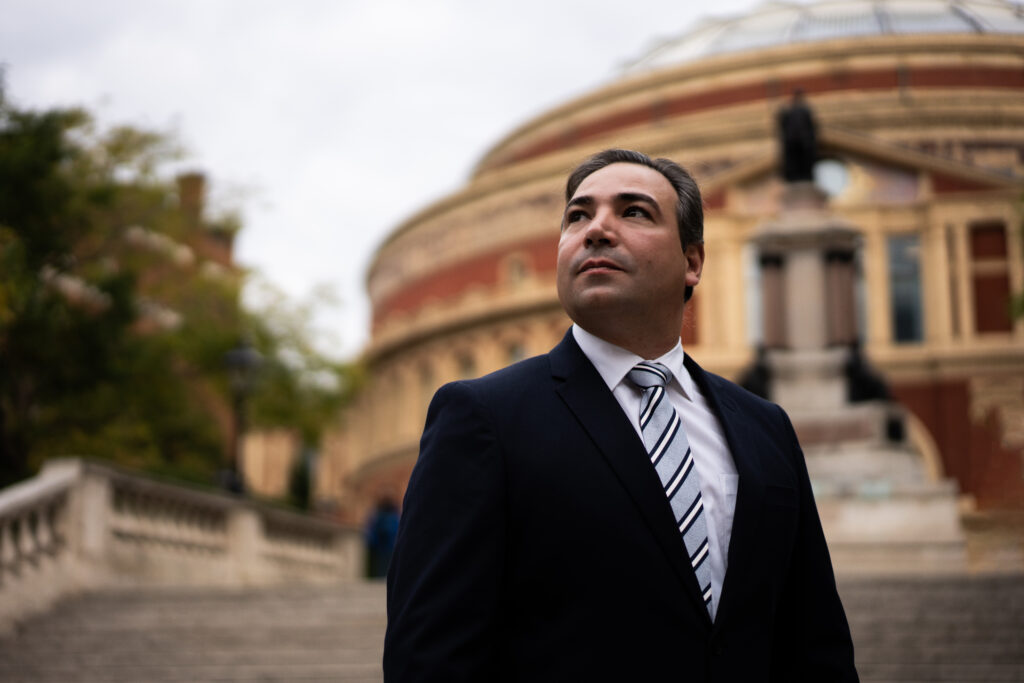
Lifestyle and brand photography showing a smart businessman stood outside the Royal Albert Hall in LondonBut from the platform’s perspective, we’ve engaged with it.

And engagement is what keeps the whole machine moving. The technology doesn’t need us to admire what it shows us. It just needs us to react. If a particular type of content consistently captures our attention, the platforms have every reason to show us more of it. If we spend our time watching, sharing and discussing increasingly generic material, we shouldn’t be surprised when our feeds become saturated with it.

That means we have more influence than we might think. We can choose what we watch. We can choose whose work we follow. We can choose to give our attention to people who bring something original to the table, businesses that have a genuine story to tell and creatives who put thought and effort into what they produce.

We can stop treating every piece of AI-generated novelty as something that deserves our attention simply because it exists.


And we can start recognising that the ability to make something quickly doesn’t automatically make it worth making.

The thing AI still can't replace

BEAUTIFUL PHOTOGRAPHYFor all the extraordinary things technology can do, I believe there’s still enormous value in something that has always been at the heart of good marketing.

People.

Real people, with real experiences, real ideas, real problems and real stories to tell.

The founder who has spent twenty years building a business. The craftsperson who cares about the details nobody else notices. The customer whose life has genuinely been improved by a product or service. The team who take pride in what they do, even when nobody is watching.

These are the things that give a business character. They’re what help us understand who we’re dealing with and why we might want to deal with them.

And they don’t need to be dressed up in an enormous headline, surrounded by garish graphics or packaged into whatever format happens to be trending this week.

Sometimes, the most effective thing a business can do is tell its story honestly, show people what makes it different and trust that the right audience will recognise its value.

That doesn’t mean every business needs a big-budget film or an expensive marketing campaign. It doesn’t mean that professional production is always the answer, or that a simple video filmed on a phone can’t be effective.

It means understanding what you’re trying to achieve, who you’re trying to reach and what makes you worth paying attention to in the first place.

The medium matters. The message matters more.

And the person behind it matters most of all.

Perhaps it's time to be a little less impressed

Property photography showing a high quality bespoke kitchen in a Dorset mansion houseI don’t believe AI is going away, nor do I think it should. It’s a powerful tool, and there will be plenty of situations where it makes sense to use it.

But I do think we need to be a little more discerning about what we create, what we consume and what we choose to celebrate.

We need to stop confusing quantity with quality, visibility with value and the ability to produce something with the ability to produce something meaningful.

Most importantly, we need to remember that standing out has never been about doing exactly what everyone else is doing.

If you’re a business owner, ask yourself whether your marketing genuinely reflects your business, or whether you’ve simply copied something that seems to be working for someone else.

If you’re a creative, ask yourself whether you’re developing your own ideas or just becoming increasingly efficient at reproducing other people’s.

And if you’re someone scrolling through social media, perhaps think about what you’re rewarding with your attention.

Because if we continue to consume the same things, we’ll continue to be served the same things. If we reward generic content, we’ll get more generic content. And if we allow the convenience of technology to become an excuse for abandoning originality, we’ll eventually find ourselves surrounded by an awful lot of things that look impressive but leave us feeling absolutely nothing.

The answer isn’t to reject every new technology. It’s to demand more from the people using it, from the platforms distributing it and, perhaps most importantly, from ourselves.

Let’s make things that mean something. Let’s tell stories worth hearing. Let’s support people who care about their craft.

Let’s give people a reason to choose us, rather than simply another reason to scroll past.

Because in a world where almost anyone can create almost anything, perhaps the most valuable thing you can offer is something genuinely worth paying attention to.